Gochujang Cucumber Salad: Spicy Korean Side Dish
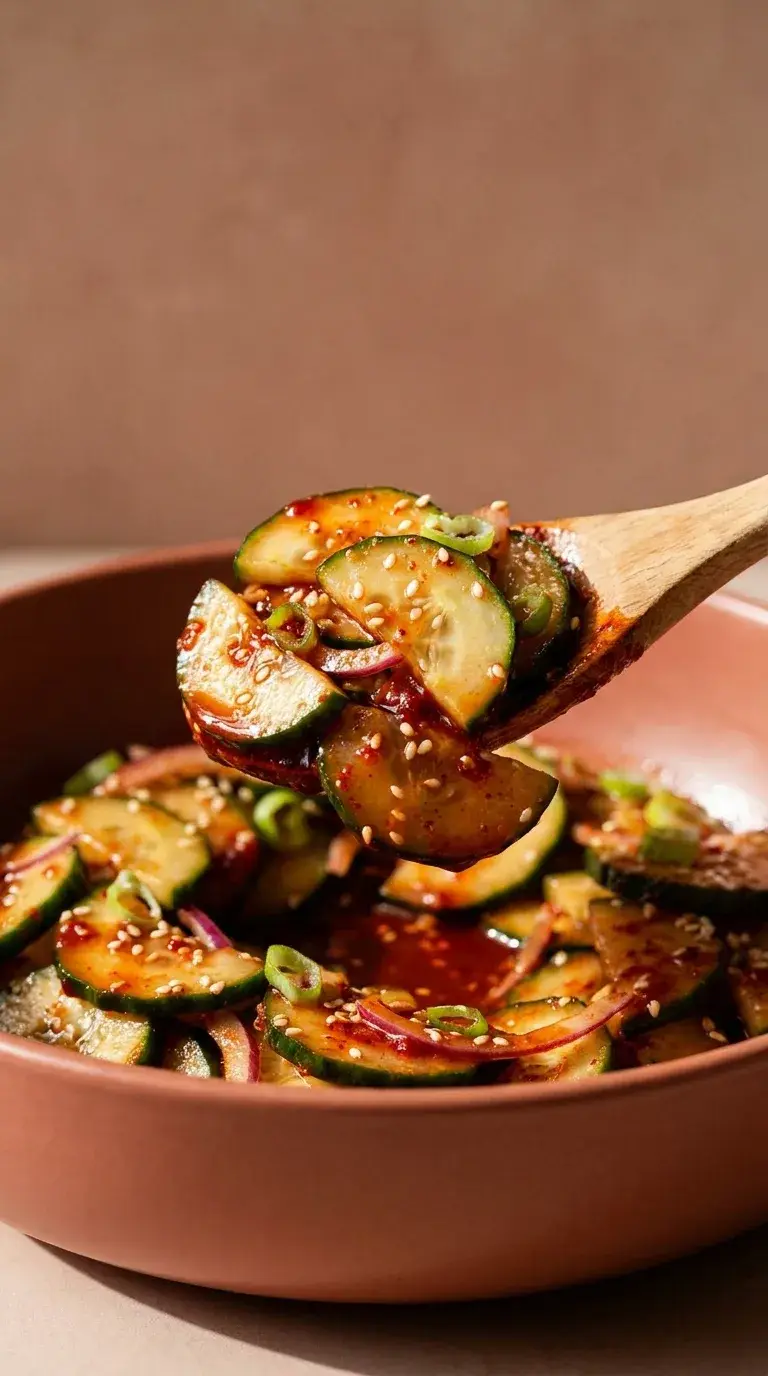
Korean salads often rely on long fermentation to develop depth. This spicy Korean gochujang cucumber salad uses a faster method to achieve a similar profile in 50 minutes. You use a combination of gochujang and gochugaru to provide immediate heat and colour. This shortcut saves hours of waiting without sacrificing the bold, pungent characteristics of the traditional cuisine.
The result is a crisp, zesty side with a nutty finish. You must toss the sliced cucumbers with 7 g of fine sea salt and let them rest for 30 minutes. This step draws out excess water so the dressing clings to the vegetables rather than pooling at the bottom of the bowl. Slice the cucumbers to 3 mm thick to ensure the gochujang penetrates the flesh for a fully integrated flavour.
Gochujang Cucumber Salad: Spicy Korean Side Dish
Recipe cardIngredients
Watch how it's made
Instructions
-
Slice the cucumbers
Slice the cucumbers into thin half-rings about 3⁄mm thick. Use a knife or mandoline for consistency. Thin slices ensure the dressing penetrates the vegetable for a more integrated flavour.
-
Draw out water
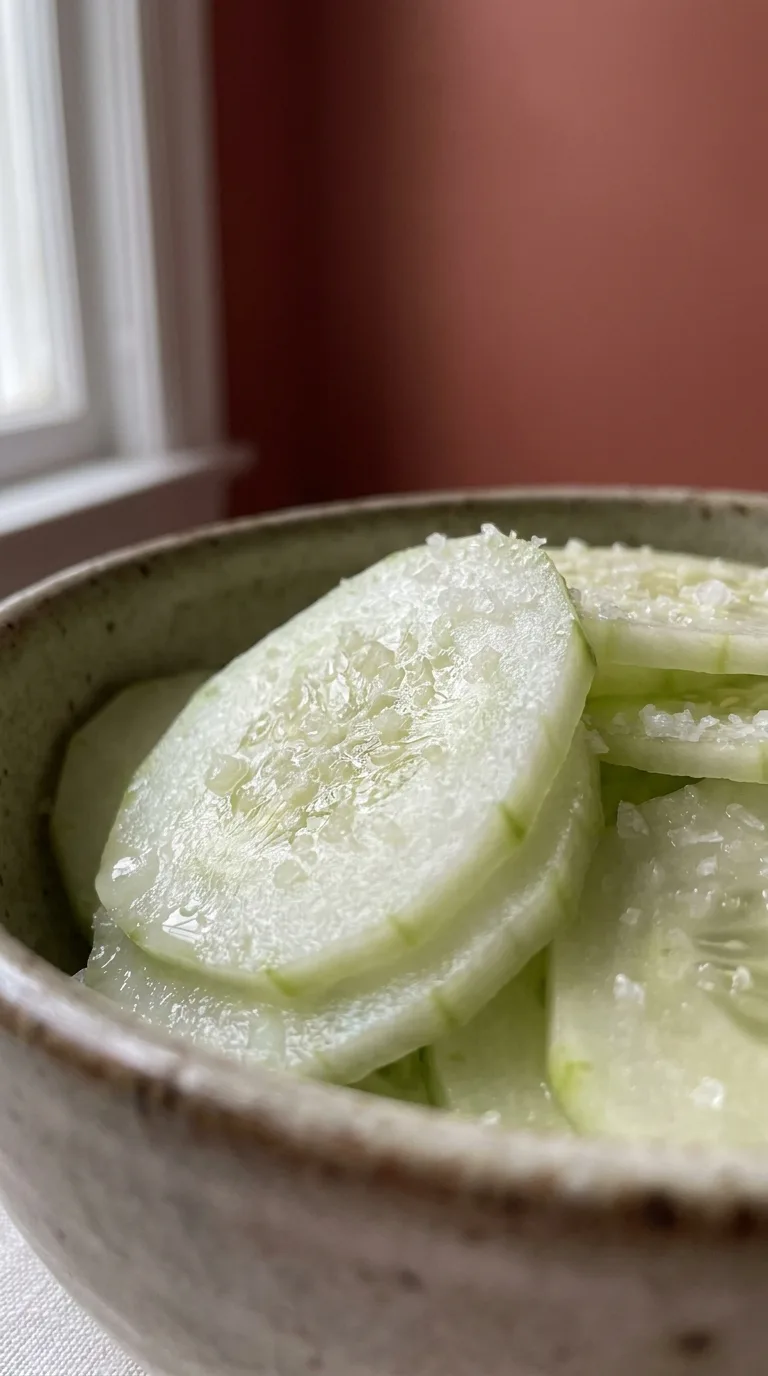
Place the slices in a large bowl and sprinkle with 7⁄g of fine sea salt. Toss to coat evenly and cover with cling film. Leave at room temperature for 30 minutes to draw out excess water so the salad remains crisp.
-
Rinse and dry
Drain the accumulated water and rinse each slice under running water. Gently press the rings between your fingers or a clean cloth to remove remaining liquid. Move the cucumbers to a clean bowl to avoid re-introducing salt.
-
Whisk the dressing
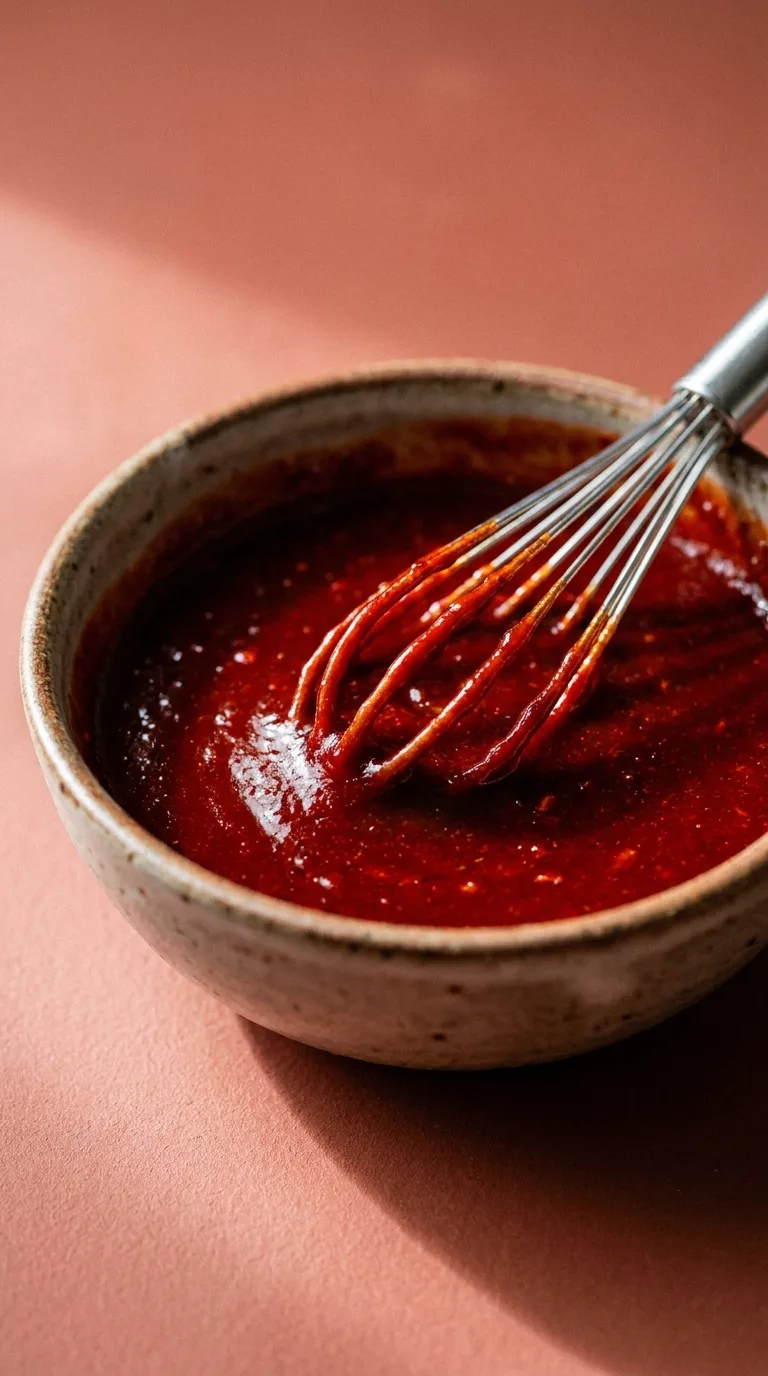
In a small bowl, whisk together the gochujang, gochugaru, soy sauce, rice vinegar, toasted sesame oil and honey. Stir until a smooth, uniform dressing forms. Ensure there are no clumps of paste for an even coating.
-
Coat the cucumber
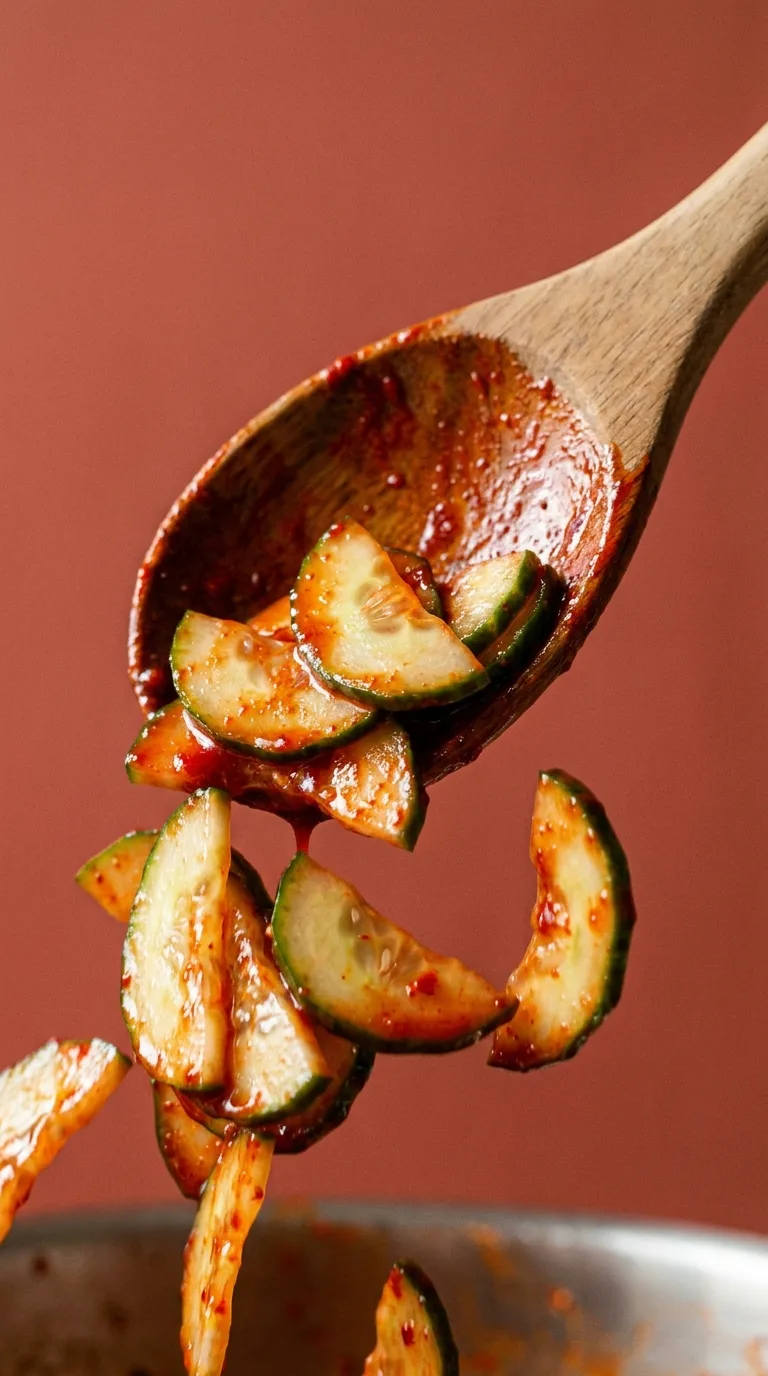
Pour the dressing over the drained cucumbers. Toss with a large wooden spoon until every slice is fully coated. The vibrant red colour should be consistent across all rings.
-
Add final aromatics
Sprinkle in the sesame seeds, sliced scallion and sliced red onion. Fold these ingredients in gently to combine. This prevents the delicate vegetables from bruising.
-
Chill and serve
Transfer the salad to a platter. If you are not serving immediately, cover with cling film and chill in the refrigerator for up to 2 hours. Give the salad one final gentle toss before serving.
Do not over-squash the cucumber when removing excess water. If you press too hard, you will bruise the flesh and ruin the texture. Use a light touch or a paper towel to ensure the slices stay firm and crisp.
How it differs from the traditional method
This version uses honey for a smoother sweetness and a refined glaze. Traditional salads often rely on sugar or pear puree. The result is a more savoury profile with a glossy finish. Choose the traditional method if you require a more authentic, fermented depth of flavour.
What to serve with it
Serve this salad as a side to grilled teriyaki chicken or beef to balance the meat with heat. You can also dress steamed rice with a spoonful of the salad for rice bowls. It works well as a fresh topping for Korean barbecue platters to add texture.
Nutrition per serving
- Calories
- 112
- Protein
- 2.1 g
- Carbs
- 14.5 g
- Fat
- 5.2 g
- Fiber
- 1.8 g
- Sugar
- 8.4 g
Estimated, and offered as a guide rather than a medical figure.
Made it? Rate it.
Questions people ask
Can I freeze this cucumber salad?
No. Do not freeze the salad because the cucumbers become mushy when thawed. The high water content breaks down the cell structure, ruining the crisp texture required for this dish.
How do I make this vegan?
Replace the honey with agave syrup or maple syrup. Ensure you use a vegan and halal soy sauce to meet all dietary requirements while maintaining the sweet and salty balance.
What can I use if I do not have gochugaru?
Use a pinch of cayenne pepper or red chilli flakes. These provide the necessary heat, though they lack the specific smoky, fruity profile of the original Korean chilli flakes.