Fettuccine Alfredo: Creamy Italian Pasta
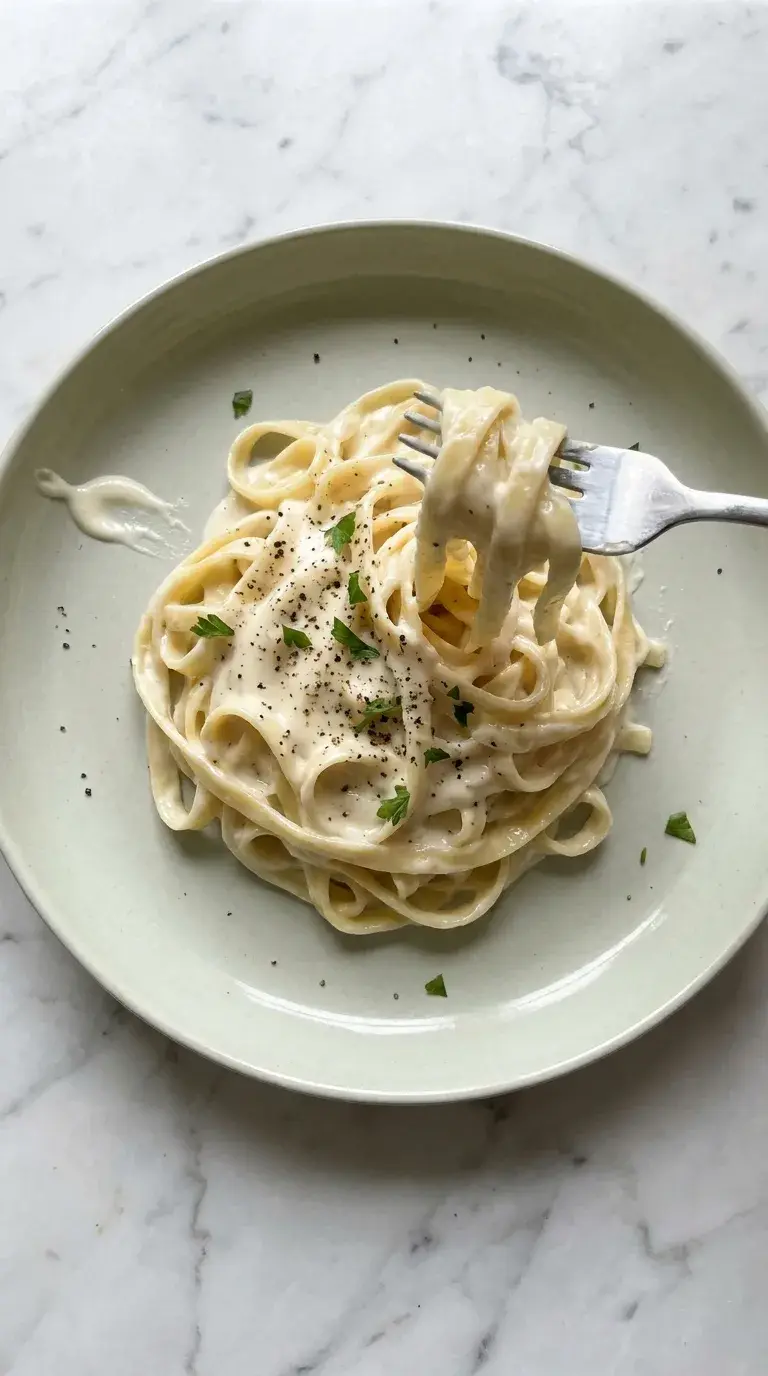
Traditional Italian versions of this dish rely on the emulsion of butter and pasta water to create a sauce. This version of fettuccine alfredo incorporates heavy cream into the base. You use this addition to ensure a thicker, more stable consistency that remains creamy even as the dish cools. This departure makes the sauce more forgiving for home cooks while maintaining the essential savoury profile of the original.
The result is a glossy, rich coating that clings to every strand of pasta. You must use freshly grated Parmesan to achieve this silkiness, as pre-grated cheese contains stabilisers that prevent it from melting smoothly. Keep your saucepan on low heat throughout the process. This prevents the cheese from curdling and ensures the sauce stays smooth. Stir in 30 ml of reserved pasta water at the end to adjust the final creaminess to your preference.
Fettuccine Alfredo: Creamy Italian Pasta
Recipe cardIngredients
Watch how it's made
Instructions
-
Boil the pasta
Fill a large pot with water and add a generous pinch of salt. Bring it to a rolling boil over high heat. Cook the 400 g fettuccine until al dente.
-
Reserve the water
Ladle out 30 ml of the starchy pasta water before you drain the pot. You need this liquid to emulsify the sauce later. Drain the pasta in a colander and set it aside in a warm bowl.
-
Sauté the garlic
Melt 113 g butter in a medium saucepan over medium-low heat. Stir in the minced garlic and sauté for 30 seconds. Do not let the garlic brown or it will taste bitter.
-
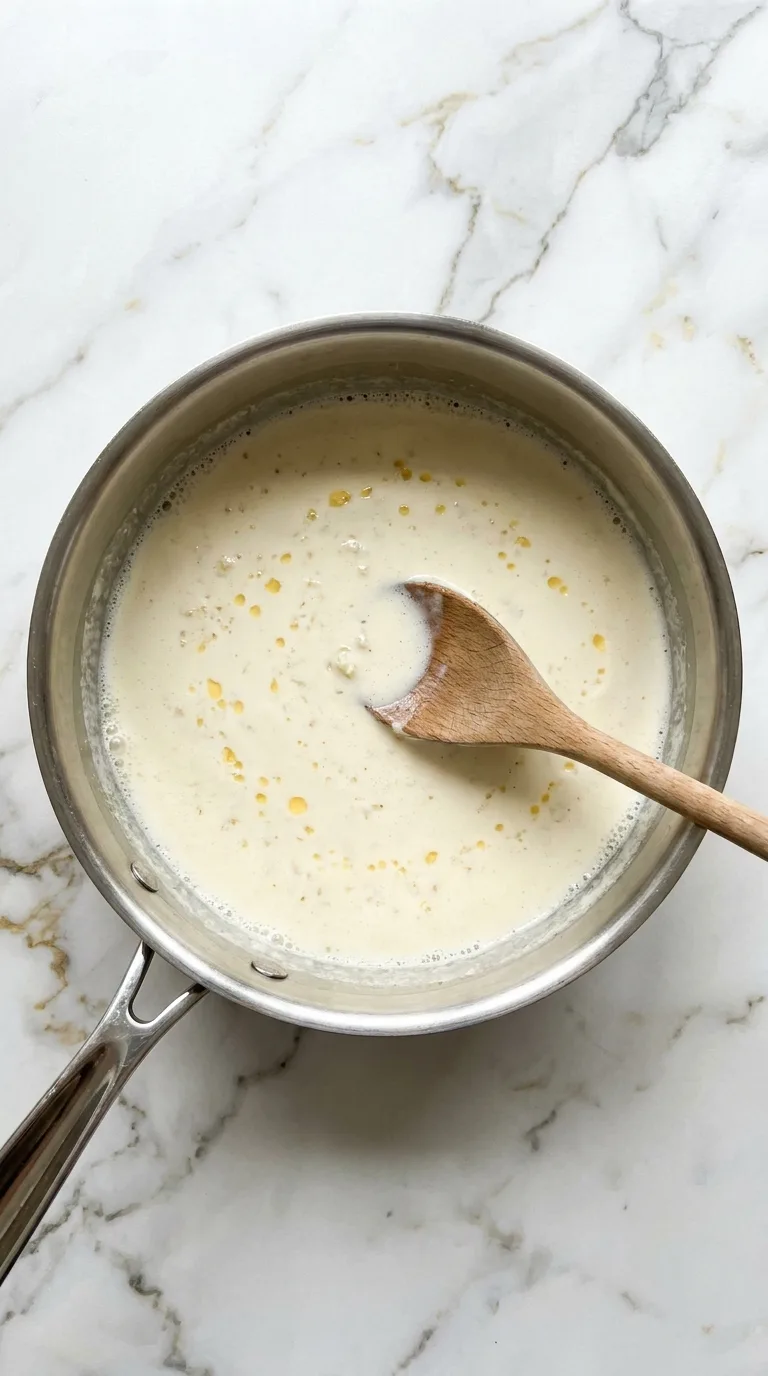
Thicken the cream
Pour in 240 ml heavy cream and reduce the heat to low. Let the mixture simmer gently. This allows the sauce to thicken slightly before you add the cheese.
-
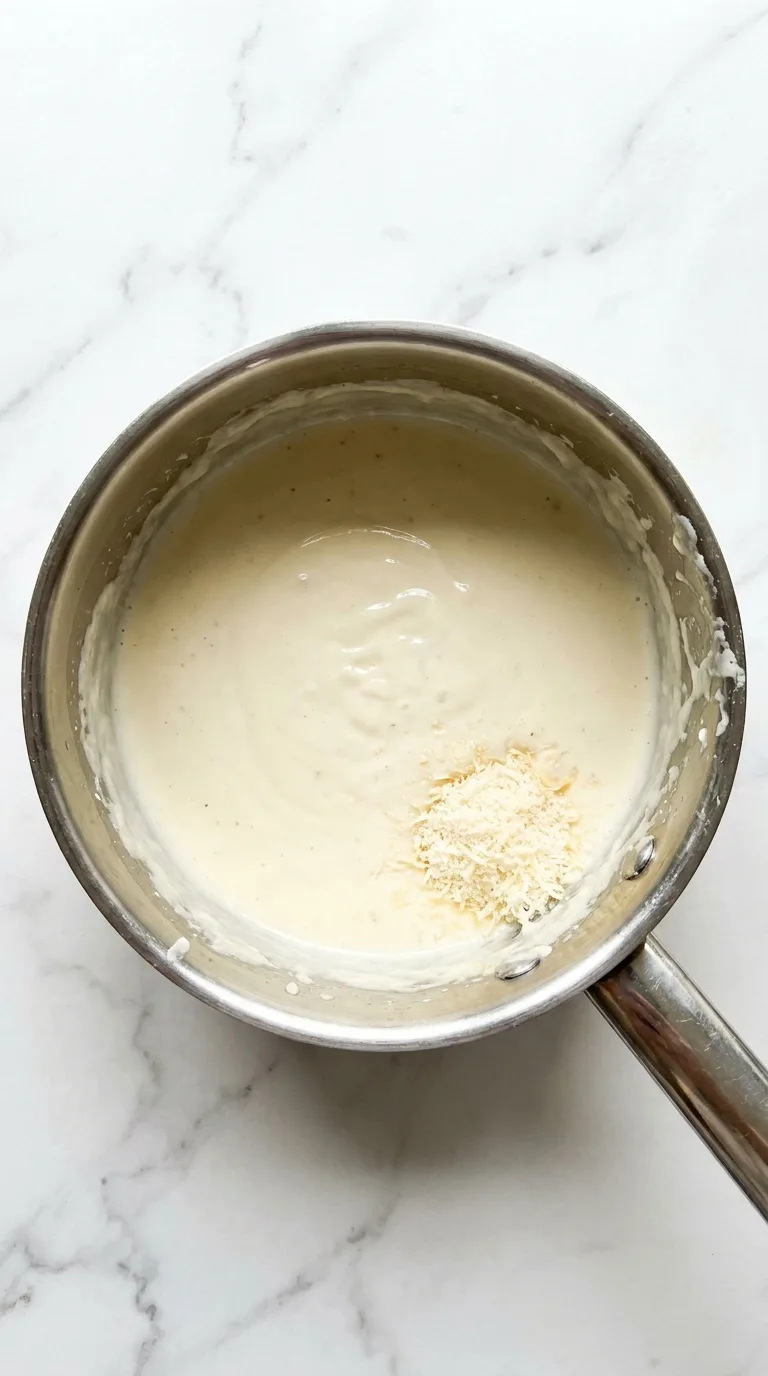
Whisk in cheese
Turn the heat to very low. Whisk in 200 g grated Parmesan until the sauce is silky and glossy. Low heat prevents the cheese from separating.
-
Combine and serve
Toss the drained fettuccine into the saucepan to coat each strand. Add the reserved pasta water a splash at a time until the sauce reaches your desired creaminess. Plate immediately and finish with black pepper and optional parsley.
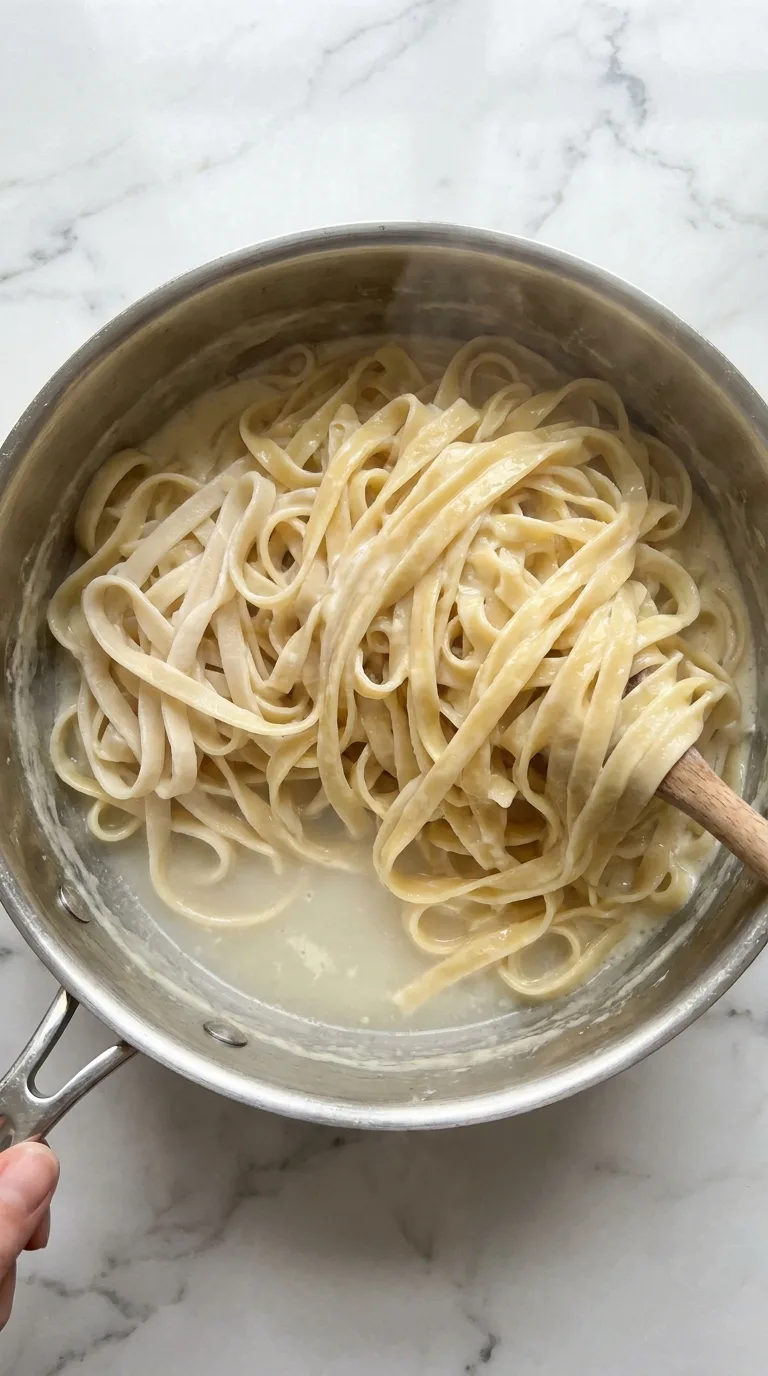
Keep the saucepan on low heat when adding the cheese. If the temperature is too high, the proteins in the Parmesan will clump and the sauce will curdle. Use freshly grated cheese rather than pre-grated versions to ensure a smooth, colourful finish without grainy lumps.
How it differs from the traditional method
This version uses heavy cream to create a stable, velvety emulsion. The traditional Italian method relies solely on butter and pasta water to emulsify the cheese. Use the traditional approach for a lighter, more authentic taste, but use this cream-based method to prevent the sauce from splitting.
Storing and reheating
Keep leftovers in a sealed container in the fridge for up to 2 days or the freezer for 1 month. Never leave the pasta at room temperature for more than 2 hours. Reheat gently on low heat and add a splash of cream to revive the silkiness.
Nutrition per serving
- Calories
- 680
- Protein
- 18.5 g
- Carbs
- 42.2 g
- Fat
- 48.1 g
- Fiber
- 2.1 g
- Sugar
- 4.8 g
Estimated, and offered as a guide rather than a medical figure.
Made it? Rate it.
Questions people ask
What is the secret to good Alfredo?
Use freshly grated Parmesan cheese. Pre-grated options contain anti-caking agents that stop the cheese from melting smoothly, which results in a grainy texture instead of a silky sauce.
What are some common mistakes to avoid when making fettuccine alfredo?
Avoid using high heat when adding the cheese. High temperatures cause the proteins in the Parmesan to clump and separate, which makes the sauce curdle rather than emulsify.
How to make fettuccine alfredo with jar Alfredo sauce?
No, this recipe uses fresh ingredients for a richer finish. To use a jar, simply heat the sauce in a pan and toss with cooked pasta, though you lose the brightness of fresh garlic.