Tuna Melt: American Broiled Open-Faced Sandwich
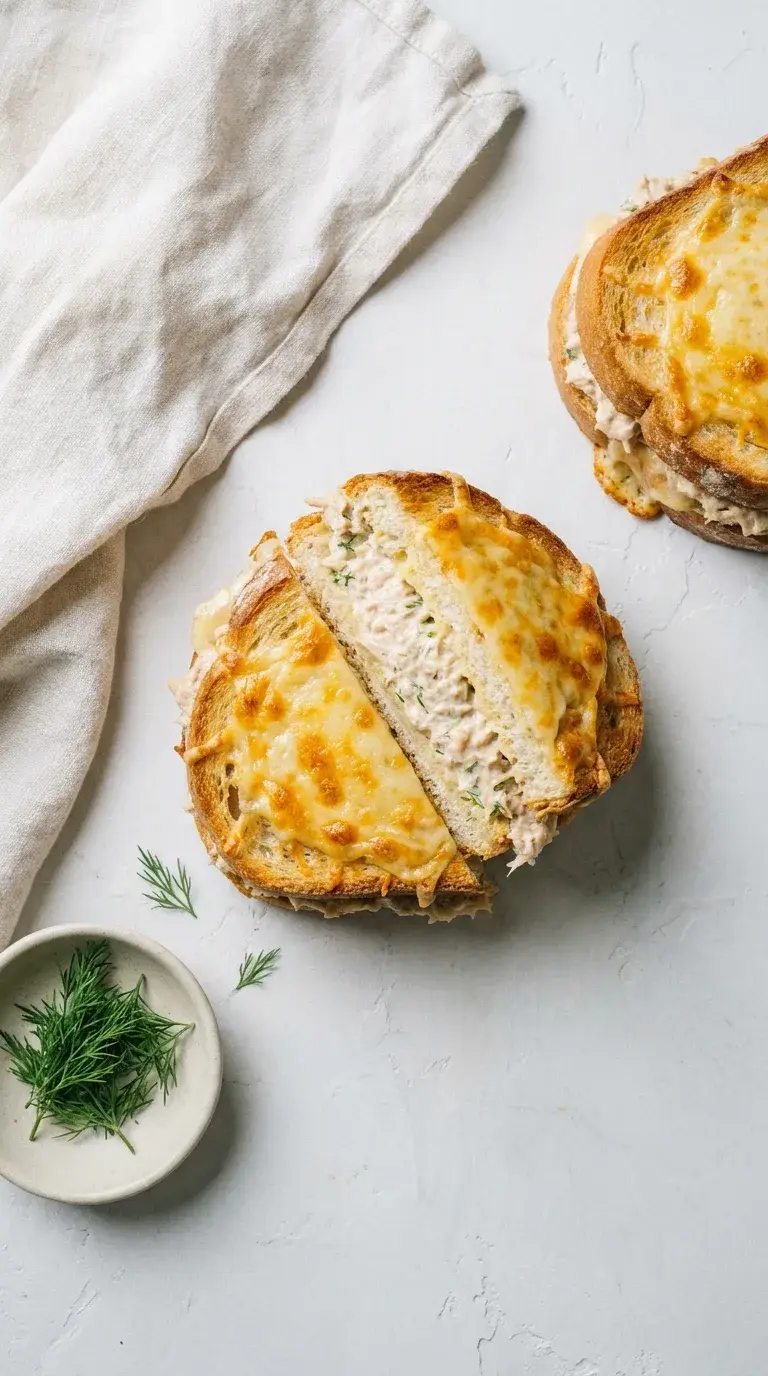
The quality of the canned tuna decides the outcome of your tuna melt under broiler. Select tuna packed in water to ensure a clean taste that does not clash with the sharp cheddar. Avoid cans with heavy oils or strong additives that mask the flavour of the fresh celery. Use a fork to flake the fish thoroughly so the mayonnaise binds the mixture into a consistent spread.
This American lunch combines toasted buns with a savoury tuna topping and melted cheese. You must toast the buns first to create a moisture barrier that prevents the bread from becoming soggy. Once you place the sandwiches 5 cm from the heat at 200°C (400°F), the cheese caramelises and browns. The result is a hearty meal with a crisp base and a molten centre, prepared in a total time of 13 minutes.
Tuna Melt: American Broiled Open-Faced Sandwich
Recipe cardIngredients
Watch how it's made
Instructions
-
Prepare the oven
Pre-heat your broiler to 200°C (400°F). Ensure the oven is fully heated before you begin assembling to avoid a soggy bun.
-
Mix the tuna
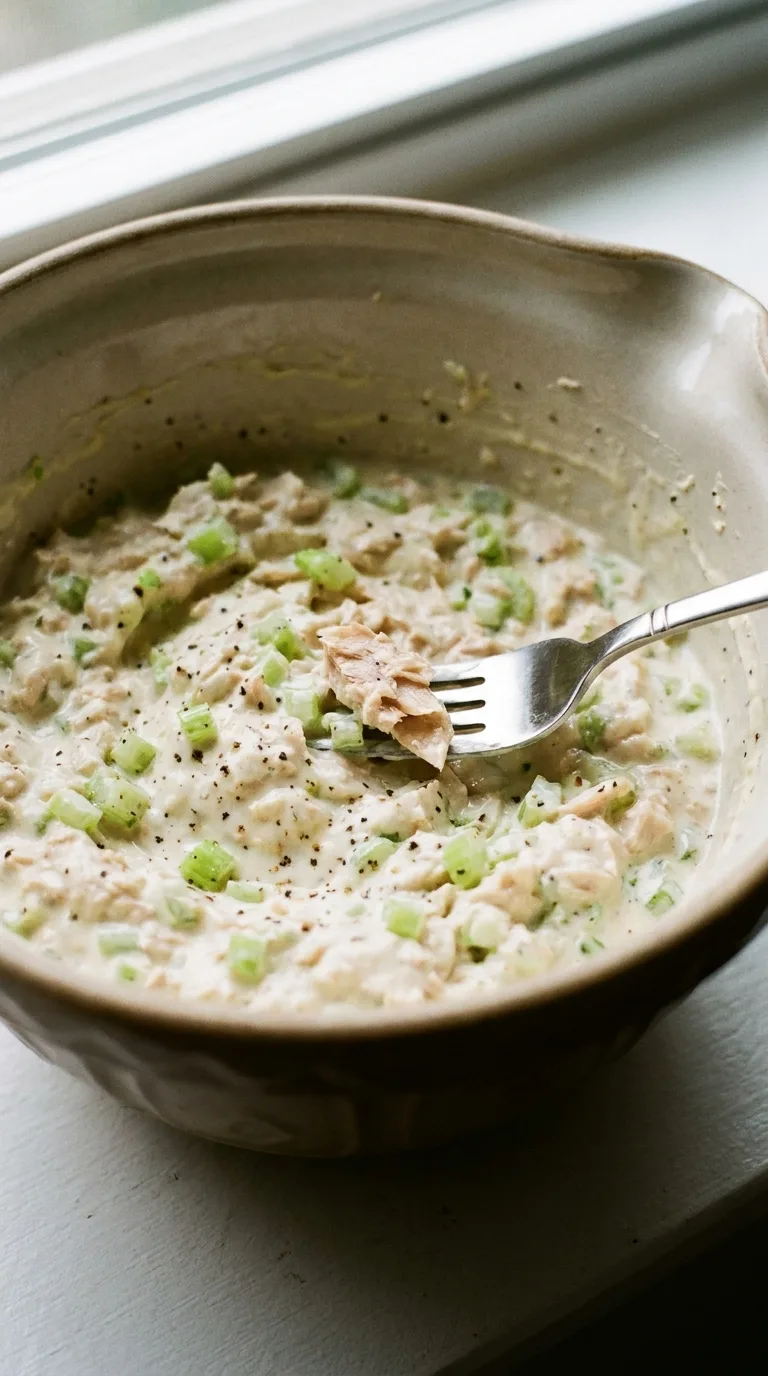
Drain the tuna and place it in a mixing bowl. Flake the fish with a fork, then stir in the mayonnaise, celery, salt, pepper and lemon juice. Mix until the texture is consistent.
-
Toast the buns
Split the sandwich buns open. Toast each half in a toaster or skillet until they are crisp and golden. This creates a barrier that prevents the filling from soaking into the bread.
-
Assemble the sandwiches
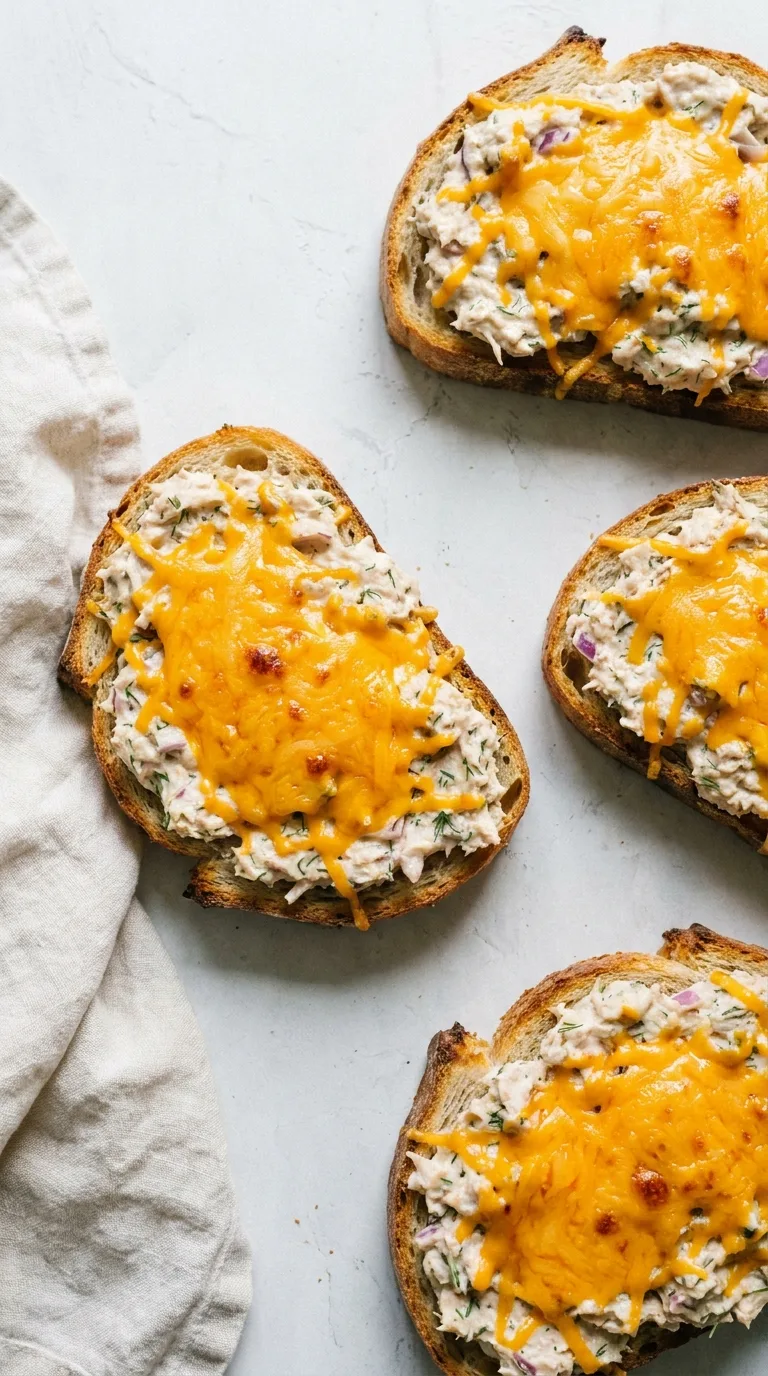
Spread the tuna mixture evenly over the toasted bun halves. Sprinkle the grated cheddar cheese over the tuna. Ensure the cheese covers the surface for an even melt.
-
Position the tray
Place the assembled sandwiches on a rimmed baking sheet. Position the sheet on the middle rack, roughly 5 cm from the broiler element. This distance prevents the cheese from burning before it melts.
-
Broil the cheese
Broil for 3–4 minutes. Watch closely until the cheese melts and just starts to brown. If the cheese browns too quickly, lower the rack by a few centimetres and broil for one more minute.
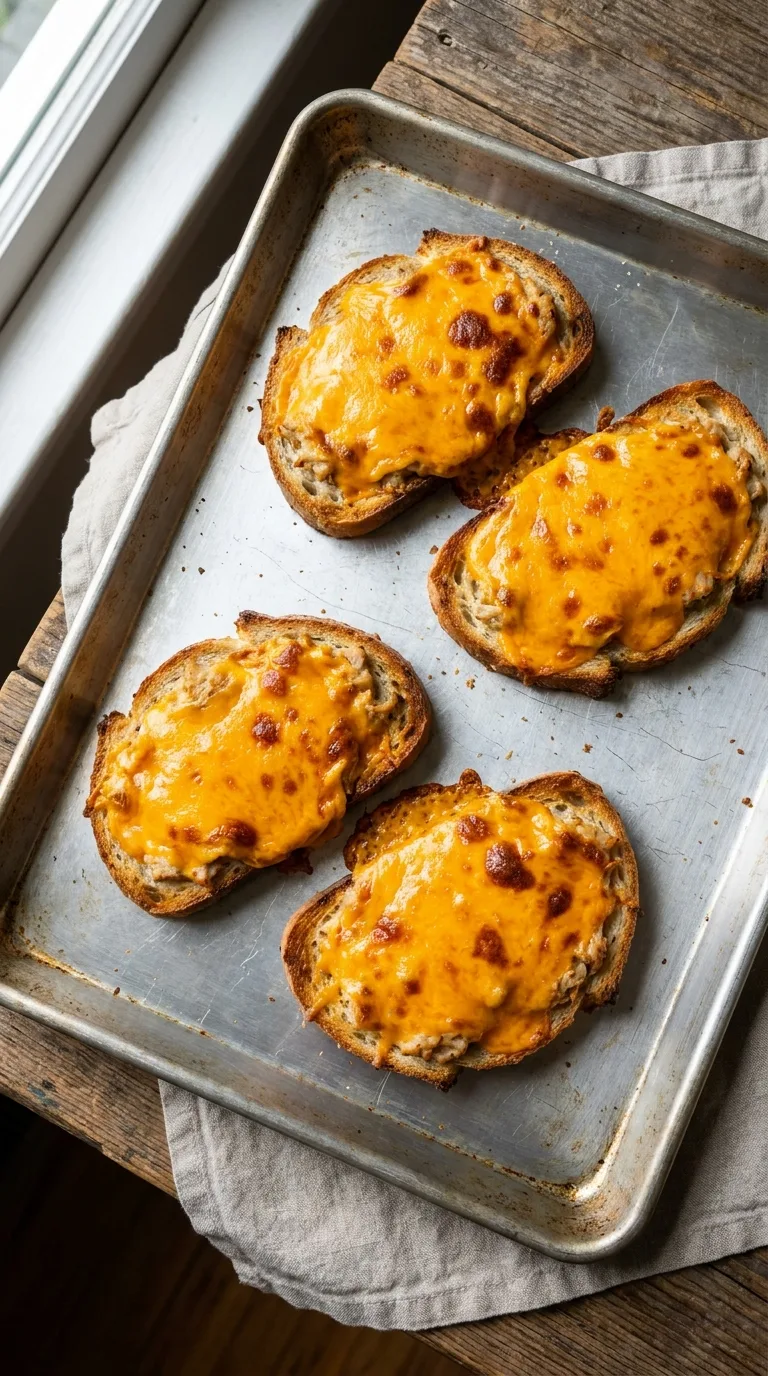
Watch the cheese carefully to prevent scorching. If your oven has a high-power broiler, place the rack in the lower third of the oven. This ensures the heat is distributed evenly, allowing the cheese to melt fully without burning the edges of the bread.
Sharp Cheddar Cheese
Use Gruyère or Emmental if you cannot find sharp cheddar. These alternatives provide a similar melt but offer a nuttier, milder flavour. Do not use a pre-shredded cheese with cellulose coatings, as it will not melt smoothly under the broiler and can leave a grainy texture on the tuna.
What to serve with it
Pair these sandwiches with a crisp cucumber and tomato salad dressed with lemon juice and olive oil for a fresh contrast. You may also serve them with a chilled glass of sparkling apple juice. For extra vibrancy, drizzle a teaspoon of extra-virgin olive oil and fresh parsley over the melts.
Storing and reheating
Eat any leftover sandwiches within 2 hours to ensure they remain fresh. You can assemble the sandwiches before broiling and wrap them in cling film. Store them in an airtight container in the freezer for up to 2 days. Re-broil from frozen, adding 2 minutes per sandwich.
Nutrition per serving
- Calories
- 480
- Protein
- 24.5 g
- Carbs
- 32.0 g
- Fat
- 26.8 g
- Fiber
- 2.1 g
- Sugar
- 5.2 g
Estimated, and offered as a guide rather than a medical figure.
Made it? Rate it.
Questions people ask
How long should I broil my tuna melt?
Broil for 3–4 minutes. You must watch the sandwiches closely because the cheese can brown quickly. If it scorches too fast, lower the rack by a few centimetres and continue broiling for one additional minute.
What are some common mistakes when making a tuna melt?
Using untoasted buns is a common error. Toast the buns first to create a barrier that prevents the tuna mixture from making the bread soggy. This ensures the base stays crisp while the cheese melts on top.
What's the secret to the perfect tuna melt?
The secret is the initial toast and proper rack placement. Place the sheet 5 cm from the element to brown the cheese evenly. Adding capers to the tuna mixture also provides a briny depth that complements the cheddar.